Cannabis (Cannabis sativa L.): Botany, Science, and Practical Utility
Medical Disclaimer: The information provided here is for educational purposes only and is not intended to substitute for professional medical advice, diagnosis, or treatment. Cannabis regulations vary widely by jurisdiction; always adhere to local laws and consult a qualified physician or healthcare provider before introducing cannabinoid products or herbal remedies into your regimen.
Welcome to our botanical feature series at Dananai.com, where we explore the history, science, and practical utility of significant plants and herbs. Today, our spotlight turns to one of the world’s most versatile and chemically intricate annual herbs: Cannabis sativa L.
1. What Is Cannabis and What Does Science Say?
Known botanically as Cannabis sativa L., cannabis is an annual flowering herb belonging to the family Cannabaceae. Originating in Central and South Asia, the species exhibits remarkable environmental adaptability, thriving across well-drained, nutrient-rich soils under warm, temperate-to-subtropical climates.
Morphologically, Cannabis sativa L. develops key structural characteristics:
- Stalk & Habit: An upright, fibrous-stalked growth habit reaching mature heights between 4 and 15 feet.
- Foliage: Distinctive palmately compound leaves with serrated leaflets.
- Inflorescence: Resin-coated flower bracts on female specimens.
Modern biomedical science views cannabis as a sophisticated chemical factory. The plant features specialized glandular hairs known as trichomes, which synthesize over 100 distinct phytocannabinoids—most prominently cannabidiol (CBD) and delta-9-tetrahydrocannabinol (THC)—alongside a rich spectrum of aromatic terpenes and flavonoids.
In the human body, phytocannabinoids interact directly with the endocannabinoid system (ECS), a complex cell-signaling network that regulates sleep, mood, pain sensation, immune response, and appetite.
| Component / System | Biological Function & Clinical Context |
|---|---|
| Phytocannabinoids (THC & CBD) | Plant-derived chemical compounds synthesized within glandular trichomes. |
| Endocannabinoid System (ECS) | Complex human cell-signaling network regulating physiological homeostasis (sleep, mood, pain, immune response, appetite). |
| Pharmaceutical Applications | Standardized, regulatory-approved cannabinoid medications treat severe refractory pediatric epilepsies (Dravet and Lennox-Gastaut syndromes), chemotherapy-induced nausea, spasticity in multiple sclerosis, and intractable chronic neuropathic pain. |
2. Natural Healing, Traditional Medicine, and Safety
For millennia, traditional healing systems—including Ayurveda, ancient Egyptian medicine, and Traditional Chinese Medicine (TCM)—documented cannabis preparations to ease bodily inflammation, reduce painful tremors, relax tight muscles, and promote restorative sleep.
In modern botanical wellness and herbal practice, preparations typically avoid smoking. Instead, aerial parts and flower buds are harvested, dried, and solvent-extracted using high-proof alcohol, CO₂, or lipids.
Herbal Preparation Formalities Solvent extraction processes yield standardized non-combustion forms:
- Sublingual Tinctures: Liquid extracts for direct absorption.
- Infused Carrier Oils & Capsules: Oral delivery formulations for consistent dosing.
- Localized Balms: Topical applications for joint and muscle aches.
Safety, Metabolism, and Drug Interactions
Understanding the metabolic fate of phytocannabinoids is critical for safe herbal application. Cannabinoids are predominantly metabolized through the liver’s cytochrome P450 enzyme pathway, specifically via the CYP3A4 and CYP2C19 enzymes.
- Pharmacokinetic Interactions: Cannabis extracts can alter the potency and clearance of co-administered medications, including blood thinners (such as warfarin), anti-epileptic drugs, sedatives, antidepressants, and certain heart medications.
- Adverse Effects: Common adverse responses include dizziness, dry mouth, alterations in heart rate, delayed reaction times, and, in high-THC varieties, heightened anxiety or disorientation.
- Precautions & Contraindications: Individuals with pre-existing cardiovascular conditions, a history of psychosis, or those who are pregnant or breastfeeding should exercise extreme caution.
3. Practical Living, Industrial Hemp, and Cultivation
Beyond its pharmacological profile, cannabis—specifically low-THC industrial hemp varieties—represents one of history’s most versatile, sustainable resource crops.
Industrial and Nutritional Utility
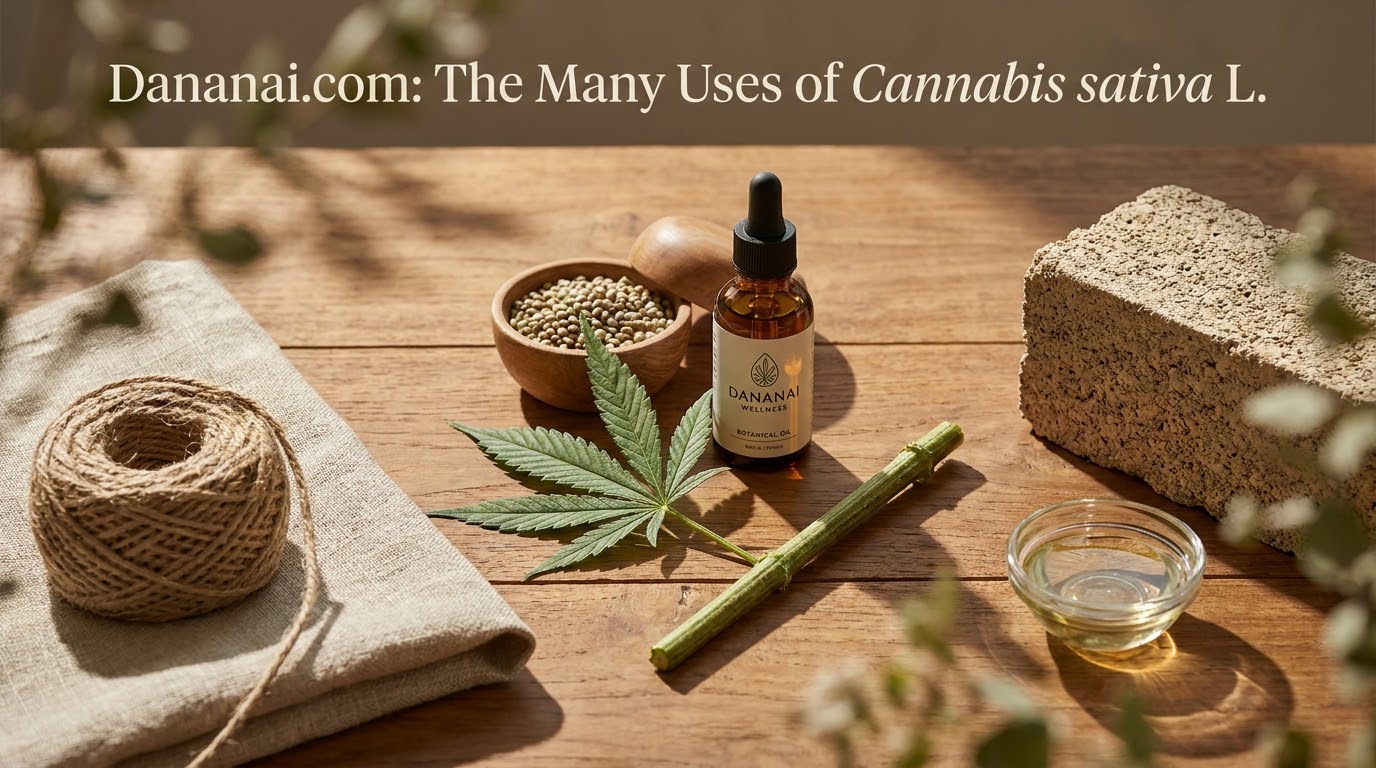
- Bast Fibers & Construction: The outer bast fibers of the stalk possess high tensile strength, traditionally processed into heavy-duty canvas, nautical ropes, clothing, and paper. Modern eco-construction utilizes these fibers in hempcrete, providing thermal insulation and sustainable carbon-negative building materials.
- Nutritional Value: Raw hemp seeds offer complete plant-based protein containing all nine essential amino acids alongside an optimal balance of omega-3 and omega-6 fatty acids. Seeds are pressed into culinary oils or processed into nutritious seed meal.
- Agricultural Crop Rotation: In farming systems, cannabis serves as an effective break crop, deep-rooting to aerate soil structures and naturally suppress aggressive weeds.
Horticultural Guidelines
Successful cultivation relies on specific environmental parameters:
- Soil & Planting: Sowed in spring after the final frost into loose, slightly acidic-to-neutral soil (pH 6.0 to 6.8) with consistent moisture and full sunlight exposure.
- Photoperiod Sensitivity: Plants vegetate vigorously during long daylight hours and transition into blooming as autumn nights lengthen.
- Harvest Timing: Optimal harvesting occurs when trichomes shift visually from clear to a milky-amber hue.
Join the Community Conversation at Dananai.com Curious about the differences between industrial hemp and botanical varieties, or want to share processing tips and sustainable gardening stories? Visit our community forums at Dananai.com to learn more and join the discussion!